


The Connection Between Sleep, Ageing and Skin Health

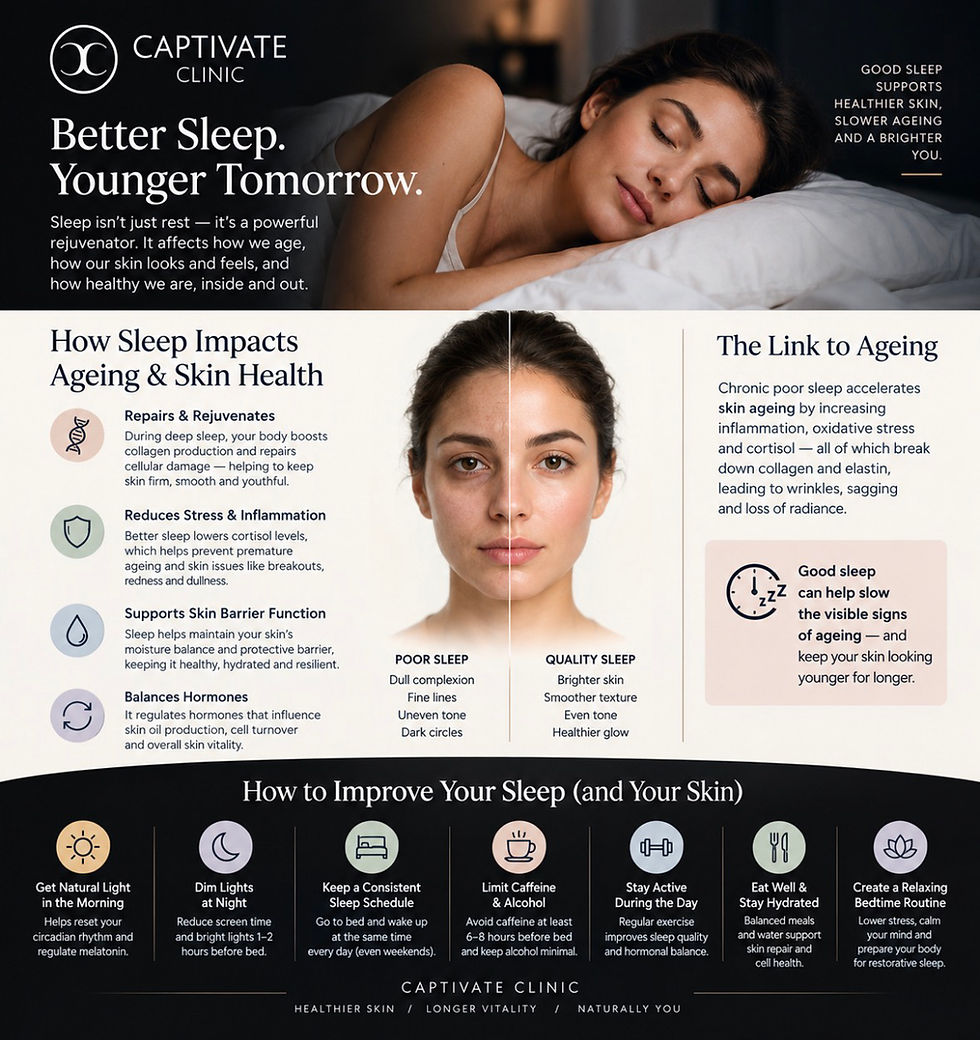
Why your circadian rhythm may be one of the most overlooked parts of a healthy ageing routine
When we think about healthy, youthful-looking skin, we often focus on skincare products, professional treatments, nutrition and hydration. But there is another important factor that is often overlooked: sleep.
Sleep is not simply a period of rest. It is an active biological process during which the body carries out essential repair and recovery. Your skin, like the rest of your body, follows a daily rhythm influenced by your circadian clock.
Understanding the relationship between sleep, circadian rhythm and skin health can help you build a more comprehensive approach to healthy ageing.
What is the circadian rhythm?
Your circadian rhythm is your body's internal approximately 24-hour biological clock. It helps coordinate processes including sleep and wakefulness, hormone production, body temperature and metabolism.
One of the strongest signals that regulates this clock is light.
Morning light helps signal to your brain that the biological day has begun, while darkness in the evening supports the natural transition towards sleep.
Modern lifestyles can interfere with these signals. Late-night screen use, irregular sleep times, shift work, travel, artificial light and inconsistent routines can all make it more difficult to maintain a regular sleep-wake rhythm.
What happens to your skin while you sleep?
During sleep, the body enters a state of recovery and repair. The skin also undergoes changes throughout the day and night, including differences in barrier function, temperature regulation and water loss.
Adequate sleep supports the body's normal repair processes and contributes to maintaining healthy skin.
When sleep is consistently poor or insufficient, studies have associated this with changes in skin barrier function, hydration and perceived appearance, as well as increased signs of stress.
This doesn't mean that one poor night's sleep will suddenly age your skin. Rather, consistent sleep habits are part of the bigger picture of long-term skin health.
Sleep and the ageing process
Ageing is influenced by many factors, including genetics, UV exposure, lifestyle, hormones, nutrition, environmental exposures and overall health.
Chronic sleep disruption can also influence pathways involved in stress and inflammation. Over time, these factors may contribute to processes associated with ageing.
The skin's ability to repair and maintain its structural components naturally changes with age. Supporting good-quality sleep is therefore one simple lifestyle factor that can complement a broader healthy-ageing strategy.
Importantly, sleep isn't a replacement for evidence-based skincare or sun protection. It is another piece of the puzzle.
Why sleep can affect how your skin looks
After periods of inadequate sleep, people may notice that their skin looks less refreshed. Common observations include:
Increased appearance of dark circles or under-eye puffiness
Dull or tired-looking skin
Changes in hydration
Increased sensitivity or irritation
A less even-looking complexion
These effects can be temporary, particularly following short-term sleep deprivation.
Long-term skin health, however, depends on consistent habits rather than chasing quick fixes.
How to Improve Your Sleep and Support Your Skin
1. Get natural light in the morning
Try to get outside and expose yourself to natural daylight soon after waking.
Morning light is one of the most powerful environmental signals for your circadian rhythm and can help reinforce a consistent sleep-wake cycle.
2. Keep your sleep schedule consistent
Going to bed and waking at approximately the same time each day can help reinforce your body's internal clock.
Consistency is particularly important if your sleep schedule has become irregular.
3. Create a darker, calmer evening environment
As bedtime approaches, reduce bright lighting and create a relaxing environment.
Your bedroom should ideally be cool, quiet and dark.
4. Be mindful of caffeine
Caffeine can remain active in the body for several hours and may interfere with sleep, particularly when consumed later in the day.
If you're struggling with sleep, consider moving your caffeine intake earlier.
5. Exercise regularly
Regular physical activity is associated with better sleep for many people and contributes to overall health and healthy ageing.
Try to make movement part of your daytime routine.
6. Don't overlook the basics of skin health
Sleep works alongside other important factors.
Daily broad-spectrum sunscreen, appropriate skincare, a balanced diet, adequate hydration, regular exercise and avoiding smoking all contribute to maintaining healthier skin as we age.
Your skin doesn't stop ageing — but healthy habits can support it
There is no single treatment, product or lifestyle habit that can stop the ageing process.
Healthy ageing is about supporting your body consistently over time.
Sleep is one of the simplest — and often most overlooked — places to start.
By establishing a regular circadian rhythm, prioritising quality sleep and combining this with evidence-based skincare and sun protection, you can create a more complete approach to maintaining healthy, resilient skin throughout life.
At Captivate Clinic
We believe healthy skin is about more than what you apply to the surface. It is influenced by your overall health, lifestyle and the way your body repairs and regenerates.
If you're concerned about changes in your skin or want to develop a personalised approach to healthy ageing, our team at Captivate Clinic can assess your skin and discuss treatment and skincare options suited to your individual needs.
Captivate Clinic
Healthier Skin | Longer Vitality | Naturally You

Comments